
 English
 عربى
 中文简体
 русский
 Français
 Deutsch
Why cm Markings on a Graduated TPU Feeding Tube Matter for Safe Enteral Placement
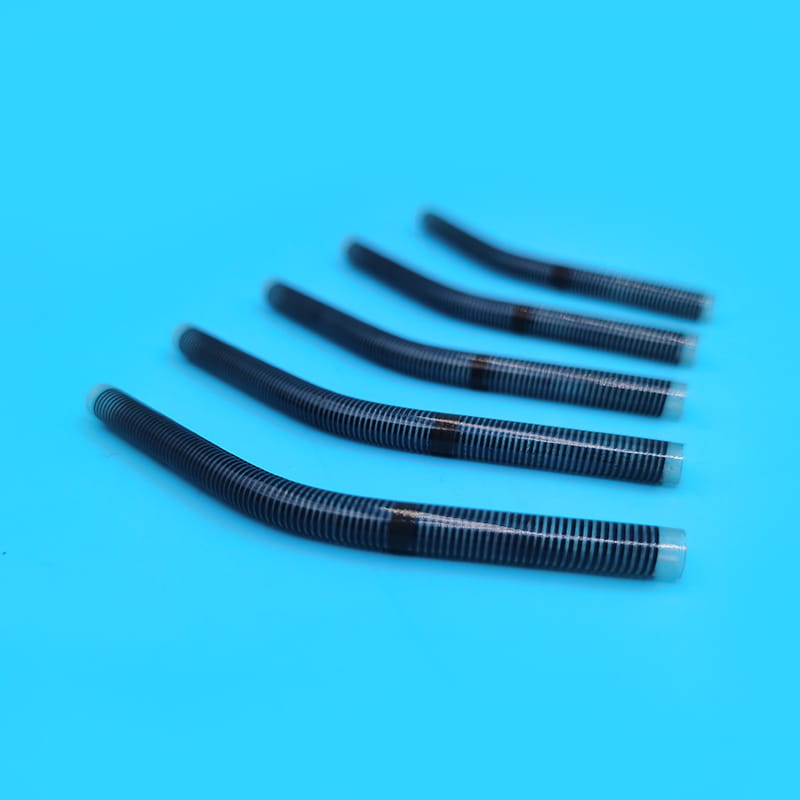
A graduated feeding tube made from TPU solves a specific problem: clinicians need to verify insertion depth without relying solely on external landmark measurements. Pad-printed centimeter markings along the tube shaft provide a direct visual reference at the bedside, allowing nurses to cross-check depth against the nares or lip during and after placement.
This matters because conventional depth estimation methods carry documented error margins. Published reviews of nasogastric tube placement methods report that correctly positioned tubes vary widely depending on the measurement approach used, and no external landmark method achieves perfect accuracy without additional verification. For suppliers and procurement teams, the practical takeaway is straightforward: a tube with durable, legible markings addresses a clinical pain point that generic feeding tubes do not. Available in 6Fr through 16Fr configurations, with custom marking intervals and surface treatment processes for OEM orders, the graduated TPU tube is a specification decision rather than a commodity purchase.
What Is a Graduated Feeding Tube?
A graduated feeding tube carries equidistant centimeter markings printed along the length of the tube shaft. These markings function as an onboard ruler: during insertion, the clinician observes the number aligned with the nostril or mouth and uses that reading to estimate how far the tube tip has advanced. After placement, the same markings allow nursing staff to monitor whether the tube has migrated by comparing the current external reading against the depth recorded at insertion.
Not every enteral tube is graduated. Many standard nasogastric tubes rely entirely on pre-insertion measurement using external landmarks, most commonly the NEX method (nose to earlobe to xiphoid process). The NEX method estimates how much tube to insert before the procedure begins; it does not provide a verification mechanism once the tube is in place. A graduated tube supplements the pre-insertion estimate with a continuous visual reference on the device itself.
This distinction is clinically relevant because depth estimation errors are not rare. Studies comparing traditional NEX measurement against modified length measurement methods have reported directionally higher appropriate-placement rates for modified approaches, though individual study designs and sample sizes vary. The implication for product design is clear: anything that adds an independent depth reference at the bedside has practical value, even when it does not replace radiographic confirmation.
The term "graduated" describes a product feature. It should not be confused with the manufacturing process used to create the markings. A tube can be graduated through pad printing, laser marking, or extrusion with colored stripes. Pad printing remains the most common approach for small-diameter TPU tubing because it accommodates curved surfaces and short production runs with custom marking patterns.
Why cm Markings on a TPU Feeding Tube Matter
The case for graduated markings rests on a simple clinical reality: external landmark measurements are approximations, and patients move. A tube inserted to a calculated depth may sit correctly at the moment of placement, but coughing, repositioning, or routine nursing care can shift it. Without markings on the tube itself, the only way to detect migration is to repeat the external measurement and hope the starting point was recorded accurately.
Published evidence quantifies the gap between estimation and actual position. Pediatric studies comparing the NEX method against height-based graphic methods have reported measurable differences in mean absolute distance from the intended gastric position, with the graphic method generally performing closer to the target. While those studies examined specific pediatric populations, the underlying principle applies broadly: estimation methods introduce variance that markings can help identify and correct.
TPU adds a material dimension to this equation. Thermoplastic polyurethane is flexible at body temperature, resistant to kinking, and suitable for short-term indwelling use. These properties make it a practical choice for nasogastric and nasoenteric tubes where patient comfort and lumen patency both matter. But TPU is also a low-surface-energy material, which means pad-printed markings do not adhere automatically. Surface treatment, typically corona discharge or plasma treatment, is required before printing to create the chemical bonding sites that hold the ink to the polymer surface. Without this step, markings may appear acceptable at inspection but degrade after contact with gastric fluids or repeated cleaning.
For procurement teams, marking durability is a specification item, not an afterthought. A tube whose centimeter markings fade after two days creates a false sense of security: the clinician expects a reference that is no longer readable. When evaluating suppliers, request adhesion test data that reflects exposure to simulated gastric fluid and repeated wipe-down, not just initial print quality.
Placement Verification: Conventional vs. Graduated Approach
TPU vs. PVC vs. Silicone: Material Selection for Graduated NG Tubes
The base material determines whether markings can be applied durably and how the tube performs during its intended indwelling period. The comparison below reflects standard properties relevant to short-term enteral feeding tubes; specific formulations and processing conditions will shift some outcomes.
| Property | TPU | PVC | Silicone |
|---|---|---|---|
| Flexibility at body temperature | High | Moderate, stiffens over time | High |
| Pad print adhesion (with treatment) | Good | Good | Poor without specialized ink |
| Kink resistance | Excellent | Moderate | Good |
| Typical short-term use window | Up to 4-6 weeks | Limited by stiffening | Extended, but softer walls |
| Marking legibility retention | Good with corona treatment | Good | Variable; ink flexibility matters |
PVC remains a low-cost option for very short-term use, but it stiffens when exposed to gastric acid and has faced scrutiny over plasticizer content in some markets. Silicone is the softest material and suitable for longer dwell times, but its surface energy makes durable pad printing more challenging without specialized ink systems. TPU occupies a middle position: it is softer than PVC at body temperature, stronger than silicone at equivalent wall thickness, and accepts pad-printed markings reliably when the surface is properly treated before printing.
For a graduated tube where marking durability is a functional requirement, TPU offers the most balanced profile among the three common materials. The caveat is that not all TPU tubing is supplied with the same surface preparation. Buyers should confirm that the marking process includes an inline or immediate pre-treatment step, because treated TPU surfaces can lose their bonding readiness within hours if exposed to ambient humidity and dust.
Pad Printing vs. Graduated: Clarifying the Terminology
Search behavior reveals a consistent confusion in this product category. Some buyers search for "graduated feeding tube" when they need a product with centimeter markings. Others search for "pad printing medical tubing" when they need a manufacturing service that can apply those markings. The two terms describe different things: graduated is the feature, pad printing is the process.
This distinction matters for sourcing conversations. A request for a graduated tube assumes the supplier has both the tubing extrusion capability and the marking process under one quality system. A request for medical pad printing catheter services assumes the buyer may supply their own tubing or work with a separate extruder. Clarifying which model applies avoids misaligned quotes and delayed tooling timelines.
From a page architecture perspective, a product page focused on graduated TPU feeding tubes can link internally to a secondary processing page covering pad printing capabilities. The anchor text should describe the destination rather than repeating the product keyword. This creates a topical cluster that serves both product searches and process searches without cannibalizing either.
Sizes, Marking Ranges & Customization Options
Standard graduated feeding tubes are specified by French size, usable length, and marking interval. The table below reflects common configurations; exact offerings vary by supplier and should be confirmed against current production capability.
| Parameter | Common Range | Notes |
|---|---|---|
| French size | 6Fr to 16Fr | Smaller sizes for pediatric; larger for adult drainage and feeding |
| Marking range | 0-50 cm or 0-80 cm | Selected to match usable tube length |
| Minimum graduation interval | 1 cm | Larger intervals sometimes used for neonatal sizes |
| Tip configuration | Straight or rounded closed tip | Side eye count and placement vary |
| Guidewire | Optional | Common for finer sizes and nasoenteric placement |
| Custom marking content | Logos, size labels, lot numbers | Subject to pad printing plate and tooling setup |
Customization decisions that affect tooling and minimum order quantities include marking interval, ink color, tube color, and whether the markings need to remain legible under specific lighting conditions (for example, contrasting colors for darkened clinical environments). Marking in inches is technically feasible but requires a separate pad printing plate and quality inspection plan; buyers targeting non-metric markets should confirm this at the quoting stage rather than assuming it is a standard option.
Quality Standards & Certifications B2B Buyers Should Verify
Enteral feeding tubes are classified as medical devices in most jurisdictions, and the marking on the tube is part of the device's intended function, not decorative printing. Quality system documentation should cover both the extrusion and the printing process as linked operations.
At minimum, a supplier should hold ISO 13485 certification for the medical device quality management system. For European market access, CE marking under the applicable directive or regulation is required, with a notified body certificate where applicable. For the United States, FDA establishment registration and device listing should be verifiable; the specific product code depends on the tube's intended use and design. A supplier that claims FDA registration but cannot provide a registration number for verification is not a compliant source.
Marking-specific quality controls deserve separate attention. Adhesion testing should reference a recognized method, such as a tape pull test or rub test, performed after simulated use conditions. Biocompatibility of the ink matters as well: the printed surface contacts the patient's nasopharyngeal and esophageal mucosa. The ink supplier should provide documentation supporting cytotoxicity and sensitization testing for the cured ink film. Because treated TPU surfaces have a limited bonding window, process control should specify the maximum time between surface treatment and printing, and the handling conditions in between.
For OEM and ODM programs, the quality agreement should explicitly assign responsibility for design verification of the marking system, not just the tube dimensions. If the buyer specifies a custom marking layout, the supplier should provide first-article inspection data showing legibility, spacing accuracy, and adhesion performance before mass production begins.
FAQ: Graduated Feeding Tube Sourcing
Q1: What is the minimum order quantity for custom graduated feeding tubes?
MOQ depends primarily on whether the requested marking layout requires a new pad printing plate and whether the tube size is already in production. Standard sizes with existing marking patterns typically carry lower minimums than custom layouts. Suppliers should quote MOQ separately for the tubing extrusion, the printing setup, and the finished assembled device, because the bottleneck is often the printing plate rather than the extrusion run.
Q2: Can you print markings in inches instead of centimeters?
Inch markings are feasible with a dedicated pad printing plate and an inspection plan that verifies spacing in inch increments. The practical consideration is whether the target market requires inch markings alongside centimeter markings or instead of them. Dual-scale markings increase plate complexity and may reduce legibility on small-diameter tubes (6Fr and below), so buyers should confirm the smallest tube size that can accommodate both scales without crowding the visible surface.
Q3: How do you test pad printing durability on TPU?
Durability testing should simulate the conditions the marking will encounter: exposure to simulated gastric fluid at body temperature, repeated wiping with clinical cleaning agents, and mechanical abrasion from the tube rubbing against itself or packaging. A tape pull test after these exposures provides a pass/fail indication of adhesion. Suppliers should be able to provide the test protocol and representative results, not just a claim that markings are "durable."
Q4: Do you provide samples before bulk orders?
Sample policy varies by supplier and by whether the request involves a standard catalog configuration or a custom marking layout. For standard sizes, samples are typically available from stock. For custom markings, suppliers may charge a tooling fee for the pad printing plate and provide samples from a short pre-production run. Buyers should clarify whether the sample will be produced on the same equipment and with the same surface treatment process as the bulk order, because a sample produced under different conditions does not validate production adhesion.
Sourcing a Graduated TPU Feeding Tube?
Send your target specification: French size range, marking interval and range, estimated annual volume, and any custom marking content. We will respond with a production feasibility assessment and tooling timeline.
For buyers who need pad printing applied to supplied tubing, include the substrate material and surface treatment history in your inquiry so the adhesion process can be evaluated correctly.
For more information, please call us at +86-18913710126 or email us at [email protected].
A graduated feeding tube made from TPU solves a specific problem: clinicians need to verify inserti...
Why Kinking and Collapse Still Limit Endoscopic Work In daily endoscopic practice, the tool that re...
Why Tapered Geometry Matters in Drainage Tubing Every drainage line depends on one simple requireme...
In the field of interventional cardiology and peripheral vascular procedures, the quality and prec...
Medical intervention in complex anatomical pathways demands precision, flexibility, and reliability...
What Is a Pressure Extension Tube and Why It Matters in Clinical Practice A pressure extension tube...