
 English
  عربى
عربى  中文简体
中文简体  русский
  Français
  Deutsch
 How a PVC Tapered Drain Tube with Reducing Diameter Improves Drainage Performance
Why Tapered Geometry Matters in Drainage Tubing
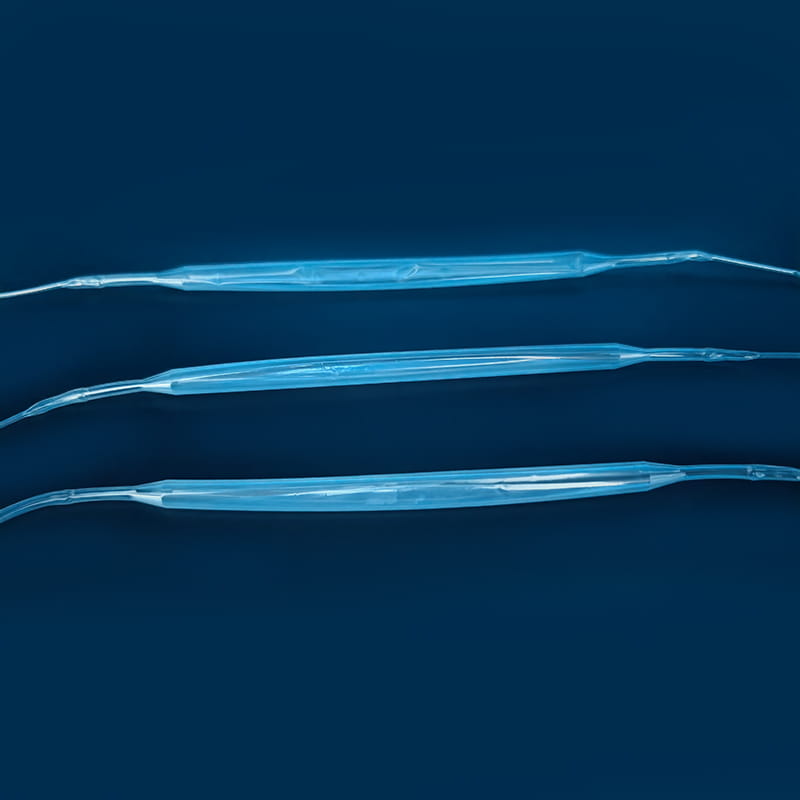
Every drainage line depends on one simple requirement: fluid should move from the collection point to the container without resistance, leakage or unexpected blockage. A pvc drain tube with reducing diameter addresses this requirement through its geometry. Instead of a single uniform bore, the tube narrows gradually along its length, so the diameter at the insertion end differs from the diameter at the connection end. This design choice affects how easily the tube is placed, how steadily fluid flows and how well the line integrates with other equipment.
A tapered profile offers practical benefits that a straight tube cannot match. The wider end can sit in the drainage site where it captures fluid efficiently, while the narrower end fits standard connectors and downstream tubing. The continuous slope also reduces the number of sudden transitions where debris, clots or fibrous material can settle. Engineers who review drainage systems often describe the problem in terms of transitions: the more abrupt the change in cross section, the more likely the flow is to stall at that point.
The table below summarizes how a tapered design compares with a straight single-bore tube in typical drainage setups.
| Aspect | Straight tube | Tapered tube |
|---|---|---|
| Insertion behavior | Fixed by one diameter | Narrow tip starts insertion, wider section stabilizes the line |
| Connector compatibility | Matches only one fitting size | Narrow end matches common fittings, wide end handles volume |
| Flow transition | No change in diameter | Gradual change with no ridges |
| Risk of stalled flow | Low, but mismatched fittings can cause it | Low when the slope is smooth and well controlled |
For buyers, the key takeaway is that a tapered tube is not simply a tube with two sizes. It is a single component designed to manage a change in size smoothly, reducing the number of joints, connectors and potential failure points in the drainage path.
How the Tapered Profile Works in Practice
Flow behavior through a gradual transition
Fluid tends to move more steadily when the wall surface is smooth and the cross section changes slowly. A tapered tube keeps the transition gentle, which lowers turbulence at the point where the diameter changes. In routine drainage, steadier movement means fewer pauses, less need for manual clearing and a more predictable output reading at the collection container. Teams that monitor drainage volume often notice that the output curve is smoother when the line has no abrupt steps.
Insertion and handling
Clinical and industrial teams both care about how a tube behaves during placement. The narrower end helps the tube pass through the first opening, and the gradual widening gives the operator a sense of how far the tube has advanced. Because the wall is continuous, there is no step that can catch on tissue, fittings or the edges of equipment. This continuity makes handling more predictable, especially when staff work under time pressure or in confined spaces.
Wall thickness and collapse resistance
A tapered tube must keep enough wall thickness along its narrow section so the lumen does not close when the tube bends. Manufacturers usually set a minimum wall thickness target for the narrowest zone and then verify the wide end separately, since each zone carries different loads. The result is a tube that resists kinking at normal bending angles while remaining flexible enough for comfortable use.
- Narrow zone: protects the lumen from collapse during bending and handling.
- Transition zone: keeps the slope smooth and free of ridges that trap material.
- Wide zone: provides the capacity needed for the expected fluid volume.
Material Selection: Why Medical-Grade PVC Fits Drainage Applications
Polyvinyl chloride remains one of the most widely used plastics for flexible tubing because it combines flexibility, clarity, processing efficiency and reasonable cost. For drainage tubing, material choice affects comfort, durability and the ability to pass sterilization and biocompatibility evaluation. Medical-grade formulations are selected with those requirements in mind and are processed under controlled conditions to limit contamination and maintain consistent properties from batch to batch.
Core properties buyers should review
| Property | Why it matters | What to confirm |
|---|---|---|
| Flexibility | Allows bending without sharp kinks | Softness and recovery after repeated bending |
| Clarity | Lets staff see fluid color and volume | Transparent or lightly tinted grades |
| Chemical stability | Maintains performance with the intended fluids | Compatibility data for the target application |
| Sterilization tolerance | Supports a safe and sterile supply | Stability after the chosen sterilization method |
| Surface finish | Influences friction and cleaning | Smoothness along the entire taper |
Color deserves attention as well. Orange and other custom colors help teams identify lines quickly during busy procedures or in equipment assemblies, while transparent grades support visual inspection of fluid. Buyers should request material documentation for the exact grade and color they plan to use, because pigments can change certain performance characteristics.
When comparing suppliers, ask for both the material datasheet and a statement of the processing environment. Two tubes made from the same nominal grade can behave differently if one was extruded in a cleaner, better-controlled line.
Dimensional Planning for Tapered and Reducing Designs
Dimensional planning is where most ordering mistakes happen. A buyer who requests a tapered tube should define four things: the outer diameter at the wide end, the outer diameter at the narrow end, the total length and the length of the transition zone. The transition length matters because a short, steep taper behaves differently from a long, gentle one, even when the two end diameters are identical.
These ranges are planning examples rather than fixed standards. The final specification should match the drainage site, the connector arrangement and the expected fluid volume.
Taper length and slope
A long transition spreads the change over more tubing, producing a gentler slope and smoother flow. A short transition is useful where the application needs a quick change in diameter within limited space, such as a compact equipment assembly. Neither approach is universally better. The right choice depends on the flow requirement, the insertion path and the arrangement of connectors at both ends.
Tolerance and consistency
Tolerance control is essential. A deviation of only a few tenths of a millimeter may look minor on a drawing, but across a taper it changes the slope noticeably and can alter both fit and flow. Buyers should ask suppliers how diameter is measured along the length, at how many points, and whether the inspection records are retained for each production lot.
- Confirm the measurement method used for both ends and the transition zone.
- Ask for the tolerance band and whether it applies to the entire length or only key points.
- Request a sample or inspection report before approving a larger order.
Clinical and Equipment Use Cases
Tapered drain tubes appear in several settings. The list below summarizes the most common needs and the features that matter most in each.
- Surgical wound drainage: a wider intake captures fluid from the wound bed, while the narrow end connects to collection devices.
- General medical fluid drainage: a tapered line reduces the number of connectors needed between the site and the container.
- Minimally invasive procedures: a flexible, narrow tip helps reach confined areas with less disturbance to surrounding tissue.
- Medical equipment support lines: tapered sections allow one tube to link a larger outlet to a smaller inlet without an extra adapter.
For industrial or laboratory settings where medical certification is not required, the same geometry can be used for liquid transfer. The material grade, documentation and cleaning requirements will differ, but the flow advantages of a smooth taper remain relevant.
Quality Control Checkpoints for Consistent Tapers
Producing a tapered tube is more demanding than producing a straight one. The diameter must change at a controlled rate while the wall thickness stays within its limits along the entire length. Reliable suppliers manage this through a combination of tooling design, extrusion control and in-line and final inspection.
- Verify raw material lot records before each production run.
- Calibrate the extrusion line and the taper forming tooling at defined intervals.
- Measure diameter at several points along the taper during production.
- Test wall thickness at the narrowest and widest sections.
- Check flexibility and kink behavior with sample bending tests.
- Confirm cleanliness and packaging before release.
Common defects to watch for
- Ridges or waves in the transition zone that disrupt smooth flow.
- Ovality, where the cross section is not perfectly round.
- Wall thinning near the narrow end, which weakens collapse resistance.
- Surface marks or contamination that can trap material or affect cleaning.
Tapered Versus Stepped Reducing Tubes: Choosing the Right Geometry
Buyers often compare a tapered tube with a stepped reducer. Both connect two diameters, but their behavior in service differs. A stepped reducer changes size at one defined point, while a tapered tube changes size continuously over a set length.
| Aspect | Tapered tube | Stepped reducer |
|---|---|---|
| Transition | Continuous slope | Sudden change at one point |
| Flow disturbance | Lower when the slope is gentle | Higher at the step |
| Manufacturing | Requires controlled forming | Often simpler to produce |
| Typical use | Flexible drainage lines | Rigid connections and fittings |
For flexible drainage lines where smooth flow and comfortable handling matter, a tapered design generally offers the stronger advantage. For rigid assemblies where a fixed connection point is acceptable, a stepped reducer may be simpler and sufficient.
Ordering Checklist for Buyers
A clear request shortens the quotation process and reduces revisions. Before contacting a supplier, prepare the following information.
- The outer diameter at the wide end and at the narrow end.
- The total length and the expected transition length.
- The wall thickness requirement, especially at the narrow zone.
- The material grade, color and transparency requirement.
- The intended application, including whether the tube will be used in a medical setting.
- The required quantity, packaging format and delivery timeline.
- The documentation needed, such as material certificates or inspection reports.
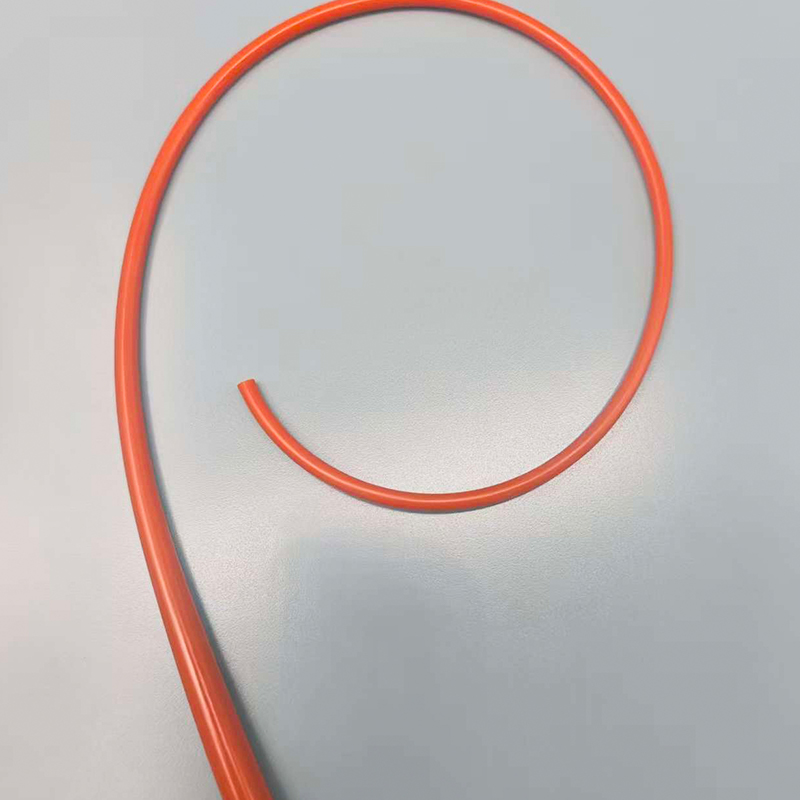
For reference specifications and the available options in the current range, the product page below summarizes the key details.
Frequently Asked Questions
Q1: What makes a tapered drain tube different from a standard drain tube?
A standard drain tube has one uniform diameter along its length. A tapered design changes diameter gradually, which allows one component to serve as both a wide intake and a narrow connection. This reduces the number of joints and helps maintain smooth flow through the transition.
Q2: Which dimensions should I define before requesting a quote?
Define the outer diameter at both ends, the total length, the transition length and the wall thickness requirement at the narrow zone. Also specify the material grade, color, quantity and any documentation you need, such as material certificates or inspection reports.
Q3: Is medical-grade PVC suitable for all drainage applications?
Medical-grade PVC suits many medical drainage uses, but final suitability depends on the fluid being drained, the expected duration of use, the sterilization method and the regulatory requirements of the destination market. Buyers should confirm these factors with the supplier before approving a design.
Q4: How is taper consistency verified during production?
Consistent tapers are verified through calibrated tooling, in-line diameter measurement at several points, wall thickness testing at both ends and bending tests for kink resistance. Final inspection and retained records confirm that each lot meets the agreed tolerance band.
Q5: Can the color and length be customized?
Yes, color and length are commonly customized to match the application. Orange and transparent grades are frequently requested for identification and visual inspection. Buyers should share the exact length and color requirement early so the supplier can confirm feasibility and lead time.
Q6: How should I compare suppliers offering tapered tubing?
Compare the tolerance control method, the availability of material documentation, the sample process and the consistency of inspection records. Ask how the supplier measures the transition zone, since this is where most dimensional problems appear. A detailed and transparent answer is a good indicator of process maturity.
For more information, please call us at +86-18913710126 or email us at [email protected].
Why Tapered Geometry Matters in Drainage Tubing Every drainage line depends on one simple requireme...
In the field of interventional cardiology and peripheral vascular procedures, the quality and prec...
Medical intervention in complex anatomical pathways demands precision, flexibility, and reliability...
What Is a Pressure Extension Tube and Why It Matters in Clinical Practice A pressure extension tube...
Polyimide tubing has become indispensable in modern medical device engineering. From minimally inv...
Understanding FEP Guidewire Protective Sheath Tubing Minimally invasive medical procedures have re...