
 English
  عربى
عربى  中文简体
中文简体  русский
  Français
  Deutsch
 What Makes an Endoscopic Spring Catheter Reliable in Practice
Why Kinking and Collapse Still Limit Endoscopic Work
In daily endoscopic practice, the tool that reaches the target site often determines how smoothly the entire procedure runs. Clinicians working in gastroenterology, respiratory medicine and urology rely on slender tubes that must travel through curved, narrow and sometimes moving anatomy. When a tube bends too sharply, collapses inside its own lumen or loses forward force partway along its path, the procedure slows down, the risk of tissue trauma rises and the team may need to reposition the scope several times before the accessory reaches its destination.
Standard flexible tubing, usually produced from a single polymer extrusion, often struggles to balance these demands. A soft wall offers comfort and flexibility, but it folds easily when it turns through a tight radius. A firmer wall resists kinking better, yet it can press against the lining of the working channel and make the distal tip less responsive. Designers therefore look for a structure that resists flattening while still allowing the tip to follow the path the anatomy requires.
This is where coil reinforcement becomes valuable. By embedding or wrapping a spring-like layer within the tube wall, engineers give the shaft hoop strength without eliminating bendability. The result is a catheter that holds a round cross section under load, transmits push force more predictably and recovers its shape after navigating a curve. These characteristics explain why spring-based designs have become a common choice for endoscopic delivery and access tasks across several clinical fields.
The central engineering question is not simply how stiff or soft a catheter should be. The real question is how well it keeps its lumen open while still bending exactly where the anatomy demands.
Defining the Endoscopic Spring Catheter and Its External Variant
What the term describes
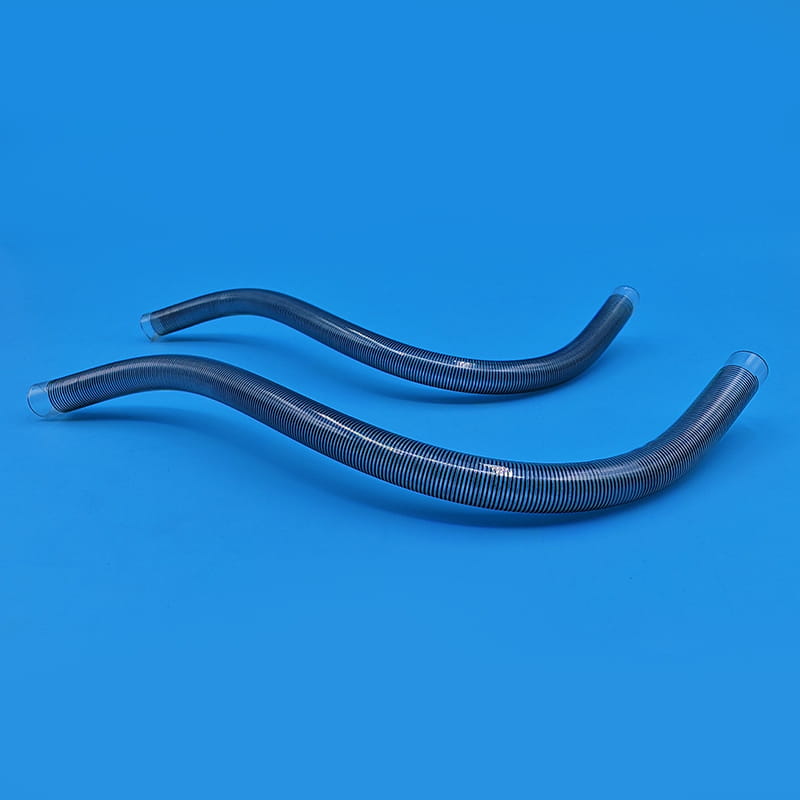
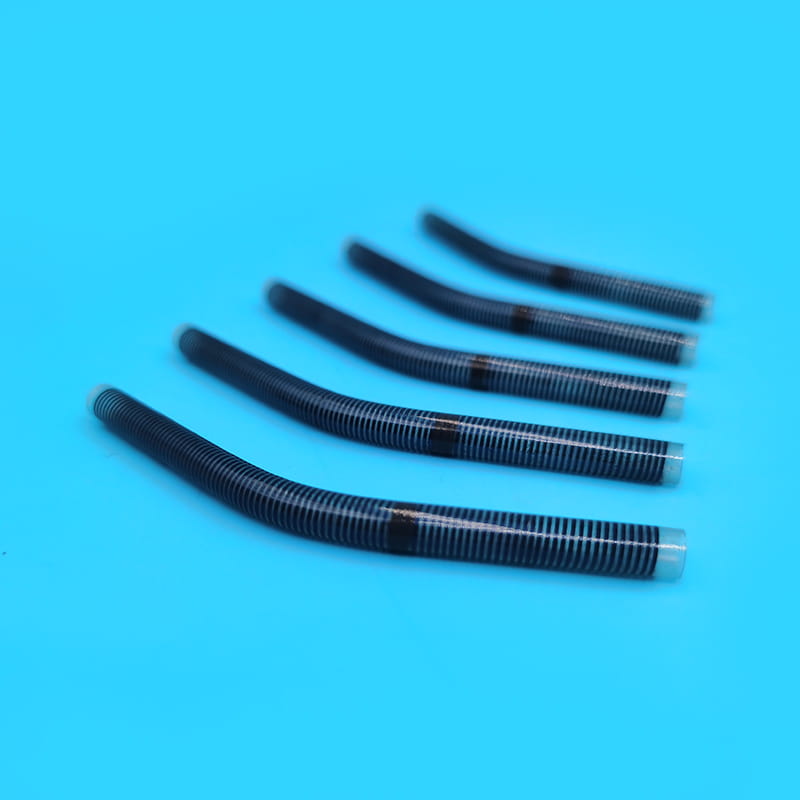
An endoscopic spring catheter is a flexible tubular device designed to pass through an endoscope working channel or to be used alongside an endoscopic procedure. Its defining feature is a helical reinforcement, often made from medical-grade stainless steel or a nickel-titanium alloy, that supports the wall and prevents the tube from folding in on itself. The coil may be integrated into the polymer body or positioned in a separate layer, depending on the design goals.
The phrase spring external catheter describes a related configuration in which the spring structure sits outside the inner lumen or beneath an outer jacket. Terminology varies between manufacturers and regions, so buyers should review technical drawings rather than rely on product names alone. The practical questions are whether a coil is present, where it sits within the wall and how it is bonded to the surrounding polymer.
Why the coil is central to performance
The coil performs three functions at the same time. It distributes radial load around the tube, it supports the lumen against external compression from surrounding tissue or the scope itself and it helps transmit push force and rotation from the handle end toward the tip. A thin-walled tube may look adequate on a bench, but it often fails when advanced through a curved passage that applies combined forces.
- Radial support keeps the lumen round and open.
- Axial transmission improves the feel of advancement.
- Recovery behavior helps the shaft return to its intended path after bending.
Anatomy of a Coil Reinforced Endoscopic Catheter
The schematic below shows how the main layers are typically arranged in a side view of a reinforced shaft. Each layer contributes a different part of the overall behavior, and understanding this stack helps teams interpret specification sheets more accurately.
Spring coil reinforcement layer
The coil is defined mainly by its wire diameter, pitch and spacing. A tighter pitch increases kink resistance but can reduce the smallest bending radius the tube can achieve. A looser pitch improves bendability while offering less support against collapse. Engineers usually select these values according to the working channel size and the curvature the device will encounter in practice.
Polymer jacket and inner liner
Outer jackets are commonly made from polyurethane, polyether block amide or fluoropolymer blends. Each material offers a different balance of flexibility, bond strength and surface behavior. Inner liners are often selected for low friction so that guidewires or accessories can move smoothly through the lumen. The bond between liner, coil and jacket is critical, because a weak bond can allow the layers to separate under repeated bending.
| Layer | Main role | Design focus |
|---|---|---|
| Inner liner | Low-friction passage | Smooth bore finish |
| Spring coil | Anti-kink support | Pitch and wire diameter |
| Outer jacket | Flexibility and bonding | Material hardness |
| Depth markers | Insertion reference | Spacing and visibility |
| Outer coating | Reduced tissue drag | Uniform surface |
Depth marker lines and outer surface
Depth markers are usually printed or laser-etched at fixed intervals along the shaft. Visible lines are easy to read under direct vision, which suits many endoscopic workflows, while some designs add radiopaque features for additional reference. The outer surface should be smooth and uniform, since local roughness can create catch points that increase friction and disturb the feel of advancement.
Core Advantages Clinicians and Buyers Look For
When teams compare reinforced tubes, they usually focus on a short list of performance attributes. The following points describe what well-designed spring-based shafts aim to deliver.
- Anti-kink performance: the coil helps the tube maintain its open path through tight bends, reducing the chance of flattening during insertion.
- Consistent pushability: force applied at the handle is transmitted more predictably to the tip, which supports smoother advancement.
- Lumen stability: the internal passage remains open under compression, helping accessories move without sudden resistance.
- Controlled flexibility: a well-tuned flexible endoscopic spring catheter bends where it needs to bend while retaining enough column strength to avoid wandering.
- Visible depth reference: marker lines allow operators to track insertion length and maintain orientation during repeated passes.
- Material suitability: medical-grade polymers and metals are selected to support safe contact with tissue during minimally invasive use.
Design goal
Keep the lumen open while preserving controlled bendability.
Typical user
Endoscopy teams, airway specialists and urology departments.
Review focus
Kink behavior, push response, marker accuracy and bond integrity.
Clinical Settings Where Spring External Catheters Fit
Gastroenterology endoscopy
Upper and lower gastrointestinal procedures frequently involve curved segments where a standard tube may fold or drag. In these settings, a reinforced shaft helps maintain a clear path for accessories, particularly when the same route must be used for several passes during a single session. Smooth outer surfaces also reduce the chance of mucosal irritation as the tube is advanced and withdrawn.
Respiratory endoscopy
Airway anatomy contains narrow and branching passages where small changes in tube behavior can have a large effect on control. Kink resistance and a stable open lumen support suction, sampling and delivery tasks, while depth markers help the team keep track of position relative to the scope. Clinicians often value predictable response more than maximum stiffness in these cases.
Urology endoscopy
Urologic procedures commonly require a relatively long pathway through a narrow channel. Adequate pushability is essential, but excessive rigidity can cause discomfort or misalignment. A coil-supported shaft balances these needs, and visible marker lines help teams confirm consistent insertion depth during repeated access.
| Clinical field | Main requirement | Priority feature |
|---|---|---|
| Gastroenterology | Passage through curves | Anti-kink structure |
| Respiratory | Stable lumen in branching paths | Lumen support |
| Urology | Long narrow access | Pushability and markers |
Technical Parameters and Customization Logic
Specifications for a spring external catheter are usually built around the working channel, the target procedure and the expected path length. Many programs start from a short list of core parameters and then adjust details such as coil geometry, tip shape and marker placement.
| Parameter | Typical range | Customization note |
|---|---|---|
| Outer diameter | About 1.5 to 4.0 mm | Matched to channel size |
| Working length | About 1000 to 2500 mm | Set by procedure route |
| Coil pitch | Varies by design | Tuned to curvature needs |
| Marker spacing | Commonly fixed intervals | Adjustable by request |
| Tip style | Open, tapered or atraumatic | Selected by application |
Dimensions and length
Diameter selection is a balance between passage clearance and lumen size. A slightly larger tube may carry accessories more easily, but it must still move through the channel without binding. Length should reflect the actual route from entry point to target, with allowance for handling and connection components.
Marker design
Marker spacing and color contrast can be tailored to user preference and documentation needs. Clear, durable markings are important because they must remain readable after repeated handling and cleaning cycles.
Material and coating options
Material choice influences flexibility, surface feel and bonding behavior. Coatings can be applied to reduce friction, and the choice depends on how the device will be used, how it will be packaged and what level of lubricity the application requires.
How to Evaluate a Coil Reinforced Endoscopic Catheter
A structured evaluation process reduces the risk of selecting a tube that performs well on paper but poorly in use. The workflow below summarizes the decision path many clinical and purchasing teams follow.
- Confirm kink resistance through controlled bend tests at the curvature your route requires.
- Assess pushability by measuring how consistently force transfers from handle to tip.
- Check lumen patency under light external compression to confirm the passage stays open.
- Inspect marker accuracy against the stated spacing and confirm legibility after cleaning.
- Review bond integrity between layers, since separation is a common failure mode under repeated bending.
- Verify packaging, sterility records and documentation before approving a larger order.
Sample testing in your own simulated anatomy is often more informative than comparing numbers on a datasheet alone, because real handling conditions reveal differences that specifications may not capture.
Procurement and OEM Considerations for Bulk Buyers
Distributors, hospital purchasing teams and OEM partners face a slightly different set of questions. They need consistent quality across batches, reliable documentation and a clear path from sample to production. Planning these elements early shortens the qualification cycle and reduces surprises later.
Sample and validation
Requesting samples before a bulk commitment allows technical teams to test handling, marker visibility and kink behavior in a realistic setup. Validation records from each production lot help confirm that performance stays stable as volumes grow.
Documentation and traceability
- Material certificates and biocompatibility records for the components used.
- Dimensional drawings showing diameter, length and marker spacing tolerances.
- Batch traceability and sterilization documentation suitable for audits.
Lead time and order planning
Lead time depends on customization depth, coating requirements and packaging format. Buyers who share their target specifications early, including the intended working channel and route length, usually receive more accurate planning estimates. A product datasheet and sample request can be made through the coil reinforced endoscopic catheter product page for teams that want to begin the comparison process.
Frequently Asked Questions
Q1: What is the difference between an endoscopic spring catheter and an ordinary flexible catheter?
An ordinary flexible catheter relies mainly on the polymer wall for shape and support, which can lead to kinking or collapse on tight curves. A spring-reinforced design adds a coil that helps the lumen stay open, improves push response and recovers its shape more reliably after bending.
Q2: What does a coil reinforced endoscopic catheter do during a procedure?
It guides accessories through the working channel while resisting flattening and external compression. The coil supports the lumen, allowing the operator to advance and withdraw the device with more predictable feedback from the handle.
Q3: Can depth markers on a spring external catheter be customized?
Yes, marker spacing, color contrast and placement can usually be adjusted according to the procedure and user preference. Clear and durable markings are important, so buyers should confirm legibility and durability after the cleaning steps used in their facility.
Q4: Are flexible endoscopic spring catheter designs available for OEM projects?
OEM programs commonly include adjustments to length, diameter, tip shape, coating and packaging. Successful projects begin with a clear specification set, followed by sample evaluation and documented validation before scaling production.
Q5: What affects the minimum order quantity for a medical coil catheter?
Minimum order quantity typically depends on how much customization is required, whether new tooling is needed and how complex the coating or packaging process is. Standard configurations often allow smaller starting volumes than fully customized designs.
For more information, please call us at +86-18913710126 or email us at [email protected].
Why Kinking and Collapse Still Limit Endoscopic Work In daily endoscopic practice, the tool that re...
Why Tapered Geometry Matters in Drainage Tubing Every drainage line depends on one simple requireme...
In the field of interventional cardiology and peripheral vascular procedures, the quality and prec...
Medical intervention in complex anatomical pathways demands precision, flexibility, and reliability...
What Is a Pressure Extension Tube and Why It Matters in Clinical Practice A pressure extension tube...
Polyimide tubing has become indispensable in modern medical device engineering. From minimally inv...