
 English
  عربى
عربى  中文简体
中文简体  русский
  Français
  Deutsch
 What Are Medical Peristaltic Pump Tubes and How Do They Work in Medical Applications?
What Medical Peristaltic Pump Tubes Do and Why They Matter
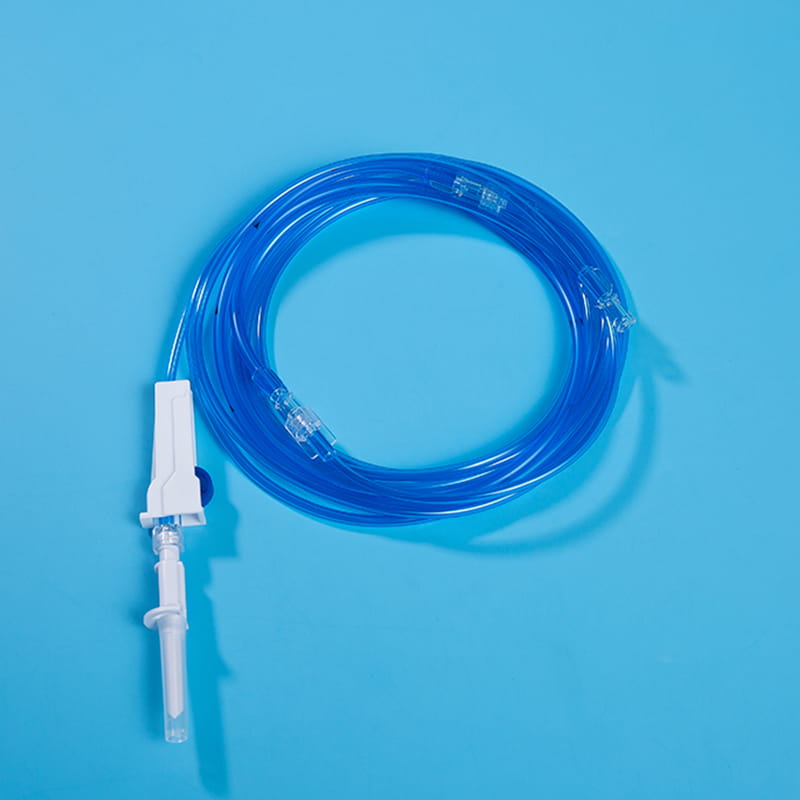
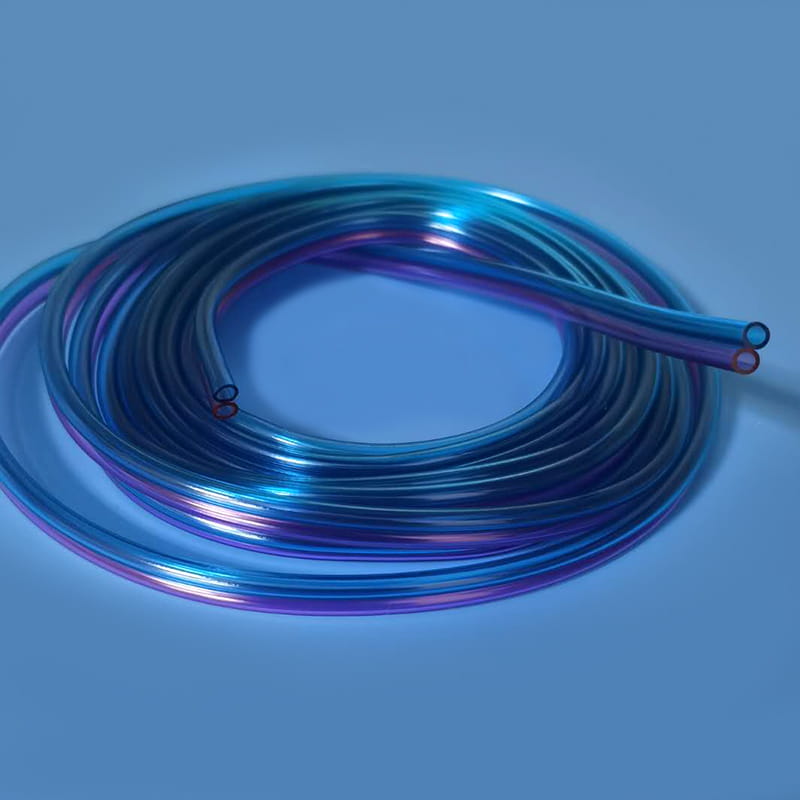
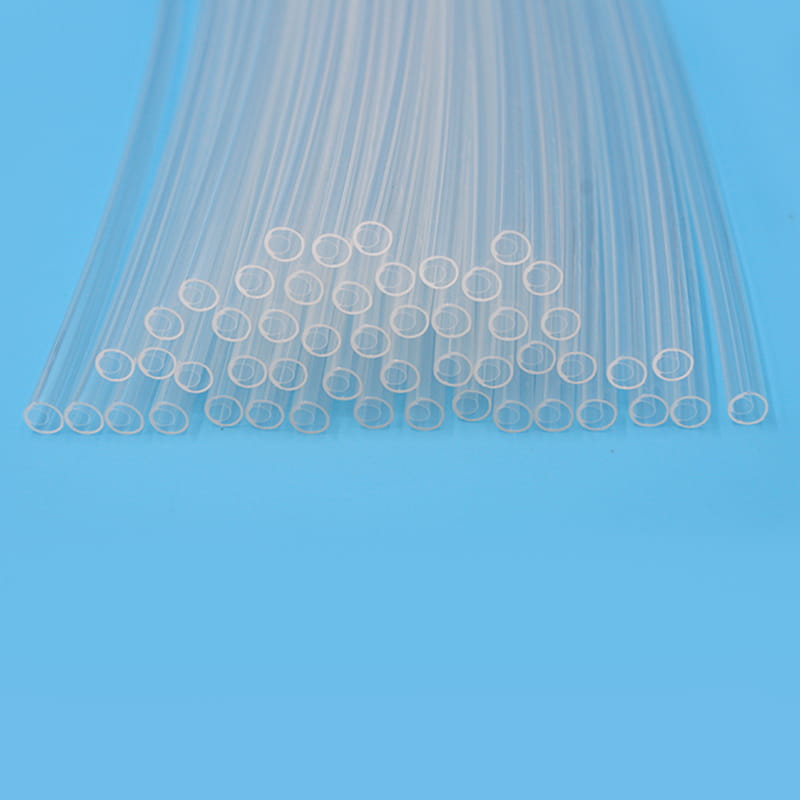
Medical peristaltic pump tubes are flexible, precision-extruded tubes that deliver sterile fluids through a pump head without any fluid contact with the pump mechanism. They work by repeated compression and relaxation – a rotor with rollers sequentially squeezes the tube, pushing fluid forward while preventing backflow. In clinical settings, these tubes enable contamination-free delivery of blood, IV fluids, dialysate, or enteral nutrition with typical flow accuracy of ±1% to ±2% and flow rates from 0.1 mL/h up to several L/h. Their single‑use design eliminates cross‑infection risks, making them essential for infusion pumps, dialysis machines, and surgical suction devices.
Core Working Principle: How a Medical Peristaltic Pump Tube Functions
The pump tube acts as the only fluid-contacting component. The pump head’s rollers or shoes compress the tube at a specific occlusion point, creating a seal that moves along the tubing. Behind the roller, the tube recovers to its original shape, generating a vacuum that draws in more fluid. This positive displacement action ensures that the fluid volume moved equals the swept volume of the tube per roller rotation, typically 0.1–10 mL per revolution depending on tube internal diameter (e.g., 1.6 mm ID delivers ~0.5 mL/rev, while 6.4 mm ID delivers ~8 mL/rev). No valves are needed – the tube itself acts as a one‑way flow path due to the roller sequence.
Key operational parameters:
- Flow rate formula: Flow = (tube internal cross‑sectional area) × (compressed length per roller) × (roller speed). For a tube with 3.2 mm ID, each roller pushes ~0.8 mL/revolution.
- Occlusion force: Medical pumps use a controlled gap – typically 0.1–0.3 mm less than the tube wall thickness – ensuring reliable sealing without excessive wear.
- Pressure range: Standard medical tubes support up to 2–5 bar (30–75 psi); reinforced tubes can handle 7–10 bar for high‑pressure applications like cardiac bypass.
Material Composition and Performance Data
Medical peristaltic pump tubes must be biocompatible (ISO 10993), fatigue‑resistant, and chemically inert. The table below shows three dominant materials with their key specs:
| Material | Key Properties | Typical Service Life (hours at 100 rpm) | Common Medical Use |
|---|---|---|---|
| Platinum‑cured silicone | High flexibility, tear‑resistant, 20–80 Shore A | > 10,000 hours | Enteral feeding, drug infusion |
| Thermoplastic elastomer (TPE) | Low extractables, weldable, kink‑resistant | 3,000–8,000 hours | Blood processing, dialysis |
| Viton / FKM (fluoroelastomer) | Chemically resistant, good for lipid‑based or aggressive drugs | 1,000–3,000 hours | Oncology chemotherapy, contrast media |
Silicone tubes are the widely used in general medical infusion due to their dynamic flex life: they withstand over 10 million compression cycles with less than 5% flow drift. For lipid‑containing parenteral nutrition, TPE is preferred because silicone can absorb lipids and change its mechanical compliance after 24–48 hours.
Critical Performance Factors for Safe Medical Use
1. Flow Accuracy and Occlusion Consistency
Medical pumps require flow accuracy within ±2% for infusions and ±5% for less critical enteral feeds. Tube wall thickness tolerance is key – a variance of ±0.05 mm changes occlusion force by ~15%, directly affecting volumetric accuracy. Premium medical tubes are laser‑measured during extrusion to ensure ID variation < 0.03 mm.
2. Spallation and Particulate Generation
Repeated compression can release microparticles (spallation). For intravenous applications, the acceptable particle limit is < 100 particles/mL >10 µm (USP <788>). Platinum‑cured silicone produces 70–90% fewer particles than peroxide‑cured silicone. In blood pumps, low‑spallation TPE tubes reduce thromboembolism risk.
3. Fatigue Life and Replacement Intervals
Clinical protocols often replace pump tubes every 24–48 hours for continuous infusion pumps, even if rated longer. Data shows that after 100 hours of continuous pumping at 60 rpm, silicone tubes retain 92–96% of original flow efficiency, while after 200 hours efficiency drops to 85–90%. Most hospital protocols set a 72‑hour to maintain ±2% accuracy.
Key Medical Applications with Specific Tube Requirements
- Infusion pumps (syringe & volumetric): Small ID tubes (0.8–2.4 mm), flow range 0.1–999 mL/h. Requires low hysteresis and no memory effect. Silicone or TPE with Shore A 50–60.
- Dialysis machines: Larger ID (4–8 mm), blood‑compatible inner surface, hemolysis index < 2%. TPE or polyvinyl chloride (medical grade) with smooth bore to prevent red cell damage.
- Surgical suction and irrigation: Reinforced silicone tube with wall thickness 2.0–2.5 mm to handle vacuum down to -90 kPa without collapsing. Flow rates up to 3 L/min.
- Enteral feeding: Soft, kink‑resistant silicone or TPE, ID 3–5 mm. Must withstand repeated clamping and unclamping. Typical life: 7–14 days of intermittent use.
In all applications, single‑use sterilized (EtO or gamma) tubes are standard, though autoclavable silicone tubes (5–10 cycles at 134°C) are available for reusable pump sets in MRI‑compatible or battery‑operated portable pumps.
Why Peristaltic Tube Pumps Excel Over Other Medical Fluid Moving Methods
Compared to piston or diaphragm pumps, peristaltic systems with medical tubes offer:
- No cross‑contamination: Only the tube contacts the fluid. Cleaning or sterilization between patients is replaced by simple tube change.
- Gentle pumping: Shear stress on blood or sensitive biologics is 2‑ to 3‑fold lower than rotary vane pumps. Red blood cell damage (hemolysis) remains below 1.5% at typical dialysis flow rates.
- Self‑priming and dry‑running capability: Tubing can run dry indefinitely without damage, unlike centrifugal pumps.
- Accuracy independent of backpressure: Flow varies less than 1% from zero to rated pressure due to positive displacement design.
The tube’s role is so central that pump manufacturers specify exact tube dimensions (wall thickness, ID, and hardness) to guarantee CE and FDA compliance. A 0.1 mm increase in wall thickness can raise occlusion force by 30%, altering flow by 10–15% – thus medical pump tubes are always validated as part of a certified pump‑tubing system.
For more information, please call us at +86-18913710126 or email us at [email protected].
Polyimide tubing has become indispensable in modern medical device engineering. From minimally inv...
Understanding FEP Guidewire Protective Sheath Tubing Minimally invasive medical procedures have re...
A medical peristaltic pump tube is a specialized fluid transfer component designed for accurate, st...
The Evolution of Catheter Visualization Technology Minimally invasive procedures have fundamentally...
Understanding Medical Catheters in Modern Healthcare Medical devices have revolutionized patient ca...
A straight catheter reaches most of the airway, but the last centimeter into a tracheostomy branch...