
 English
  عربى
عربى  中文简体
中文简体  русский
  Français
  Deutsch
 Key Applications of Medical PI Tube in Cardiovascular and Neuro Interventions
The evolution of minimally invasive procedures in cardiovascular and neurological interventions has placed demands on biomaterials. Among these, the medical PI tube—fabricated from polyimide—has emerged as a structural and functional cornerstone. Known for its high dielectric strength, thermal stability, mechanical resilience, and biocompatibility, the medical PI tube enables device designs that were impossible with conventional polymers.
Material Advantages Driving Clinical Adoption
Before delving into specific applications, it is essential to understand why the medical PI tube is preferred over materials such as PTFE, nylon, or Pebax. Polyimide offers a unique combination: thin walls (below 0.025 mm achievable), high tensile strength, resistance to kinking, and lubricity when coated. It withstands repeated sterilization (ethylene oxide, gamma, or e-beam) and remains stable under body temperature for extended periods. In imaging, polyimide shows near-radiolucency, minimizing artifacts in X-ray, CT, and MRI. These properties directly translate into better navigation, pushability, and torque response in catheters and microcatheters.
Cardiovascular Interventions: Precision in Tight Spaces
Cardiovascular procedures require devices that traverse tortuous anatomy—coronary arteries, peripheral vessels, and cardiac chambers—without losing lumen patency or causing dissection. The medical PI tube fulfills these needs in several key components.
Microcatheter Shafts for Chronic Total Occlusions
Chronic total occlusions (CTOs) represent some of the challenging coronary lesions. Crossing a CTO demands a microcatheter with exceptional tip stiffness transition and kink resistance. A medical PI tube forms the inner liner or the entire distal shaft of such microcatheters, providing a smooth, low-friction lumen for guidewires while maintaining column strength. The thin wall allows a larger inner diameter within a given outer diameter, critical for delivering balloons or stents through tight lesions.
Guide Catheter Braid Reinforcement
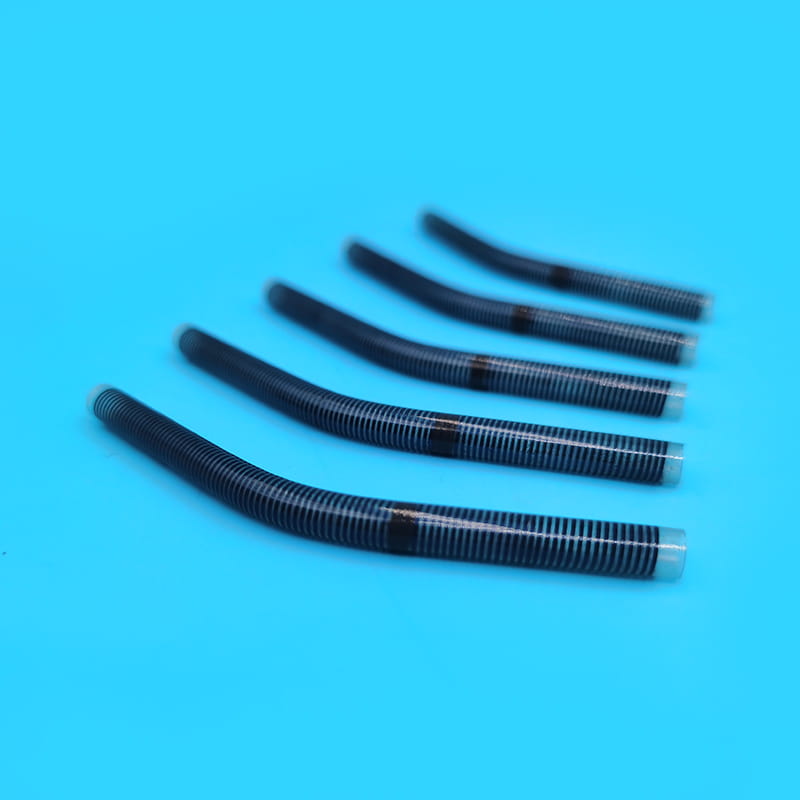
Conventional guide catheters often incorporate stainless steel or nitinol braids between inner and outer layers. Replacing metal braids with laser-cut medical PI tube segments offers a non-metallic alternative that reduces thrombogenicity and MRI artifact. These PI reinforcement rings maintain hoop strength and kink resistance while improving flexibility. The result is a guide catheter that tracks better over the aortic arch and into the coronary ostium with less vessel trauma.
Delivery Systems for Transcatheter Heart Valves
Transcatheter aortic valve replacement (TAVR) systems utilize long, multi-lumen shafts to control the compressed valve. The medical PI tube serves as a stabilizing chassis within these shafts, ensuring coaxial alignment during deployment. Its thermal stability prevents dimensional changes during balloon expansion or self-expanding frame release, reducing the risk of malposition.
Comparison of Tubing Performance in Cardiovascular Access
| Property | Conventional Polymer Tube | Medical PI Tube |
|---|---|---|
| Wall thickness achievable | ≥0.05 mm | ≥0.012 mm |
| Kink radius (mm) | 5–8 | 1–3 |
| Tensile strength (MPa) | 40–70 | 150–230 |
| MRI artifact | Moderate | Minimal |
| Sterilization methods limited | Ethylene oxide only | EO, gamma, e-beam |
Neuro Interventions: Navigating the Cerebral Vasculature
The neurovascular system presents even greater challenges: vessels are thinner, more tortuous, and prone to vasospasm. Intracranial aneurysms, arteriovenous malformations, and acute ischemic strokes require devices that combine softness with precise torque control. The medical PI tube has become indispensable in neurointerventional devices.
Distal Access Catheters
A distal access catheter (DAC) must reach the M2 or M3 segments of the middle cerebral artery. The medical PI tube used as a hypotube along the proximal section provides the push needed to advance the catheter while a softer distal tip prevents vessel perforation. Polyimide’s high modulus allows the proximal shaft to be stiffer without increasing outer diameter, preserving flow around the catheter. Many modern DACs incorporate a seamless transition from PI tube in the body to a softer distal polymer.
Microcatheters for Aneurysm Coiling
For coil embolization of intracranial aneurysms, the microcatheter must deliver platinum coils precisely into the sac while maintaining stability against pulsatile blood flow. A medical PI tube forms the internal lumen (0.017–0.027 inch ID) with shape retention after steam shaping—a critical feature for matching the aneurysm neck angle. Unlike hydrophilic coatings that degrade, polyimide’s surface can be permanently modified for lubricity or drug elution. The tube’s resistance to compression prevents coil prolapse back into the parent artery.
Neurostimulation Lead Bodies
Deep brain stimulation (DBS) and vagus nerve stimulation (VNS) leads require insulation that resists body fluid ingress and provides consistent impedance over decades. The medical PI tube serves as an outer insulation layer over the conductor coils. Its pinhole-free dielectric properties prevent short circuits, while its flexibility allows it to bend with neck or brain movement without fracture. Furthermore, PI tubes can be laser-machined to create windows for directional stimulation electrodes.
Flow Diverter Delivery Systems
Flow diverters for large wide-neck aneurysms are deployed through microcatheters that must not deform the implant. The medical PI tube used as a delivery system liner reduces friction between the pusher wire and the flow diverter, enabling smooth unsheathing. This same tube protects the fragile braid structure during loading and tracking.
Imaging Compatibility as a System Advantage
Both cardiovascular and neuro interventions rely on real-time fluoroscopy and increasingly on intra-procedural MRI. The medical PI tube’s near-radiolucency reduces shadowing and blooming artifacts, allowing clinicians to see the device tip and surrounding anatomy clearly. In MRI-guided interventions, polyimide creates no susceptibility artifact, enabling accurate catheter tracking with active or passive markers. This imaging advantage alone is driving replacement of metal-reinforced tubes with medical PI tube alternatives.
Manufacturing and Quality Considerations
Medical grade polyimide tubing is produced through a controlled solution-casting or vapor deposition process, yielding tubes with precise dimensional tolerances (±0.005 mm). Quality requirements include inspection for pinholes, ovality, and surface defects. Biocompatibility per ISO 10993-1 is mandatory, including tests for cytotoxicity, sensitization, and hemocompatibility. For neuro applications, additional particulate testing ensures no debris enters cerebral circulation.
Conclusion
The medical PI tube has transitioned from a niche material to a platform technology in cardiovascular and neuro interventions. Its unmatched combination of thin-wall strength, kink resistance, imaging compatibility, and biostability enables next-generation catheters, delivery systems, and neurostimulation leads.
For more information, please call us at +86-18913710126 or email us at [email protected].
Medical intervention in complex anatomical pathways demands precision, flexibility, and reliability...
What Is a Pressure Extension Tube and Why It Matters in Clinical Practice A pressure extension tube...
Polyimide tubing has become indispensable in modern medical device engineering. From minimally inv...
Understanding FEP Guidewire Protective Sheath Tubing Minimally invasive medical procedures have re...
A medical peristaltic pump tube is a specialized fluid transfer component designed for accurate, st...
The Evolution of Catheter Visualization Technology Minimally invasive procedures have fundamentally...