
 English
  عربى
عربى  中文简体
中文简体  русский
  Français
  Deutsch
 Curved Suction Catheter: Tip Design and Sizing Guide
A straight catheter reaches most of the airway, but the last centimeter into a tracheostomy branch or a difficult bronchial path is where repositioning wastes time a patient in respiratory distress does not have. A curved suction catheter is shaped specifically to remove that extra maneuvering.
What Sets a Curved Tip Apart
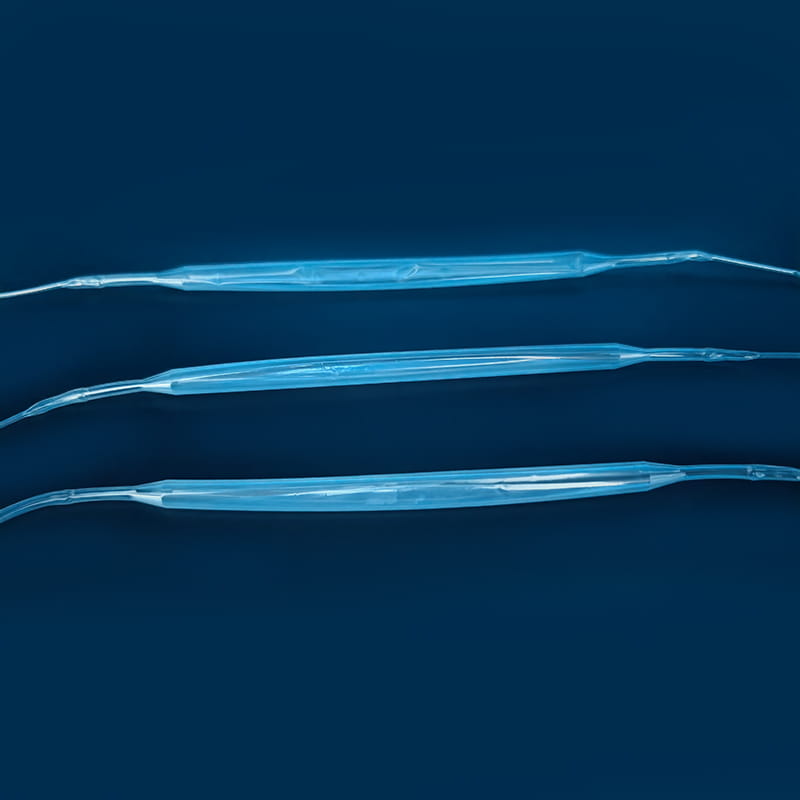
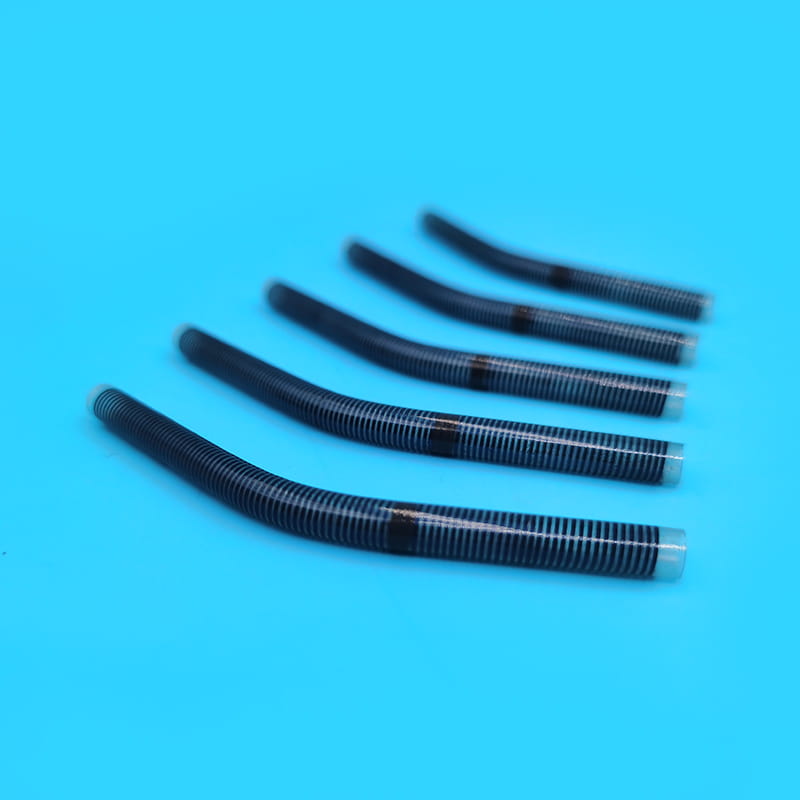
A curved suction catheter is a flexible airway tube with a pre-shaped, angled distal tip that directs the catheter toward a specific airway branch instead of relying on the operator to twist a straight tube into position.
The angled shape reduces the number of repositioning attempts during suctioning, which shortens procedure time and limits repeated contact with sensitive airway tissue.
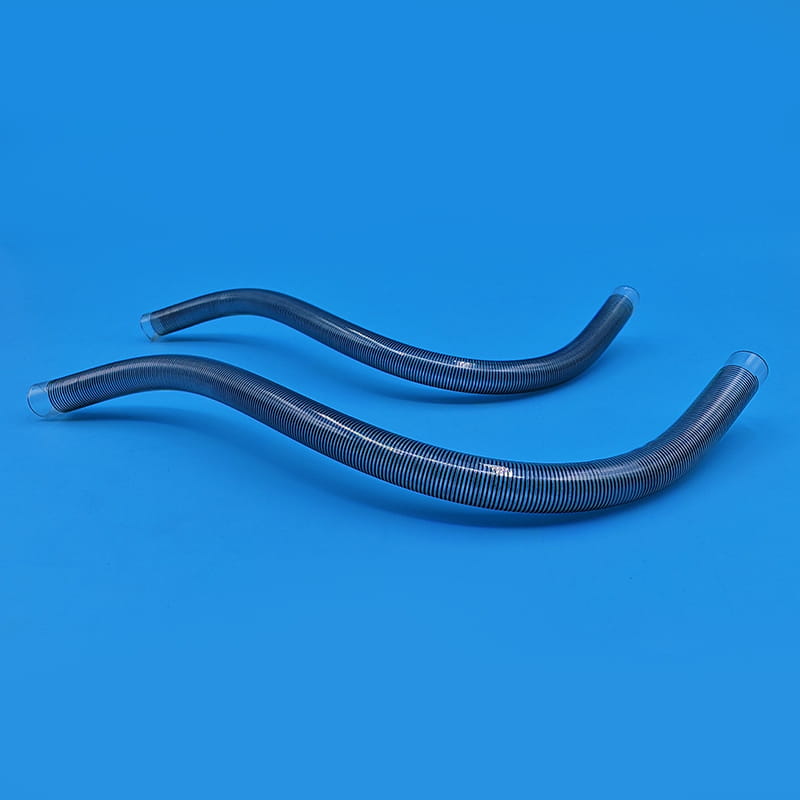
The tube itself is typically extruded from medical-grade PVC, silicone, or thermoplastic elastomer, with side suction openings positioned to prevent tissue occlusion while negative pressure is applied.
Specifications Clinicians Check First
Curved vs Straight Suction Catheter
| Feature | Curved Suction Catheter | Straight Suction Catheter |
| Tip design | Angled or curved | Straight |
| Airway navigation | Easier in complex areas | General access |
| Directional control | Better | Limited |
| Typical use | Difficult or targeted access | Routine suctioning |
How a Suctioning Procedure Runs
Catheter insertion
The curved tip is gently guided into the endotracheal or tracheostomy tube, with the angle helping direct placement toward the target branch.
Vacuum activation
Negative pressure is applied through the suction control valve, drawing secretions in through the side suction openings.
Secretion removal
Mucus, fluid, or blood is cleared from the airway while the operator monitors suction time and patient response.
Withdrawal and reassessment
The catheter is withdrawn and the airway is reassessed to confirm secretions have been adequately cleared.
Choosing Between Curved Catheter Options
Size selection should match patient age and airway diameter first, since an oversized curved suction catheter increases tissue irritation risk while an undersized one reduces suction efficiency. Material softness and tip smoothness matter next, particularly for patients requiring frequent or long-term suctioning. Sterile, single-use packaging should always be verified against its expiration date before a procedure.
Frequently Asked Questions
When is a curved tip preferred over a straight catheter?
A curved tip is generally preferred for tracheostomy care and difficult airway anatomy, where directional control reduces the number of insertion attempts needed.
What French sizes are available for pediatric patients?
Pediatric sizing typically runs smaller in French size than adult catheters, and the correct size should always be matched to airway diameter and clinical guidance.
Are curved suction catheters single-use only?
Most curved suction catheters used in clinical settings are disposable and sterile-packaged for single patient use to reduce cross-contamination risk.
How is suction time controlled during a procedure?
The suction control valve allows the operator to activate and release vacuum pressure precisely, limiting suction exposure to only the time needed to clear secretions.
For more information, please call us at +86-18913710126 or email us at [email protected].
Medical intervention in complex anatomical pathways demands precision, flexibility, and reliability...
What Is a Pressure Extension Tube and Why It Matters in Clinical Practice A pressure extension tube...
Polyimide tubing has become indispensable in modern medical device engineering. From minimally inv...
Understanding FEP Guidewire Protective Sheath Tubing Minimally invasive medical procedures have re...
A medical peristaltic pump tube is a specialized fluid transfer component designed for accurate, st...
The Evolution of Catheter Visualization Technology Minimally invasive procedures have fundamentally...