
 English
 عربى
 中文简体
 русский
 Français
 Deutsch
Why Medical Peristaltic Pump Tubes Decide the Accuracy of Drug Delivery Systems
Why Tubing Decides Whether Your Pump Delivers the Dose You Programmed
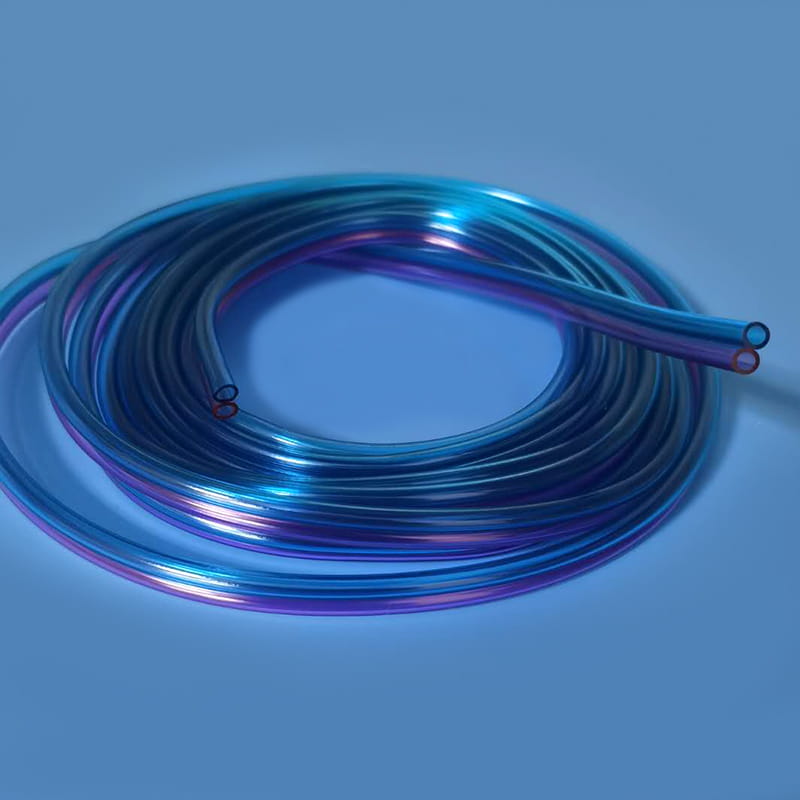
In most drug delivery design reviews, attention goes first to the motor, the controller, and the firmware. In many peristaltic systems, however, the tube itself is where dosing accuracy is won or lost. A medical peristaltic pump tube is not a passive conduit. It is compressed, released, and re-sealed against a rotor with every revolution, so its mechanical behavior translates directly into the volume that reaches the patient.
Engineers who investigate unexplained flow drift often find the root cause in the tubing rather than the drive electronics. A tube that recovers slowly after occlusion, has uneven wall thickness, or stiffens after thousands of cycles will deliver a volume that moves away from the programmed setpoint. For high-value biologics and small-volume infusions, even modest drift can push a patient outside the therapeutic window.
This article examines the tubing from three angles: its mechanical role in dosing precision, the material and contamination requirements that govern its use in regulated environments, and the practical selection criteria that quality and procurement teams can apply. The focus is on measurable parameters and validation practice rather than general claims about quality.
Key takeaway: Dosing precision is a property of the tube and pump pair, not of the pump alone. Specifying tubing with the same rigor applied to the drive is the fastest route to stable performance across production lots.
The first figure is a useful way to think about the problem. A continuous infusion running at a modest speed completes more than a thousand compression events in a single day. Each event is a chance for the tube to behave differently, which is why small mechanical variations accumulate into measurable dosing error over a long run.
The Tube Is the Pump: How Rebound and Wall Geometry Govern Accuracy
A peristaltic pump moves fluid by occluding the tube ahead of a roller and advancing that occlusion along the tube. The volume delivered per revolution depends on how completely the tube closes, how fully it reopens behind the roller, and how consistently it behaves around its circumference.
Occlusion and Rebound Recovery
Rebound is the tube's ability to return to its full open lumen after the roller has passed. If recovery is incomplete, the lumen does not return to its full volume, and the next stroke starts from a different baseline. The result is a repeatability problem that often looks like random flow noise on a flow sensor.
Several material and design factors influence rebound:
- Hardness and elasticity, which determine how quickly the wall returns to its original shape after compression.
- Temperature, because elastomers relax differently at warm and cold operating conditions.
- Roller geometry and pressure setting, which determine how much strain is applied on each pass.
Wall Thickness Uniformity
Wall thickness tolerance matters because the roller meets a different wall thickness at different points around the tube. A tube with thin and thick zones creates uneven occlusion pressure, which appears as pulsation in the delivered flow. For microdosing, where the stroke volume is small, this pulsation can be a significant share of the programmed dose.
The table below summarizes how tubing size relates to typical applications and the sensitivity that matters most in each case.
| Inner diameter | Typical use | Flow profile | Main sensitivity |
|---|---|---|---|
| 0.5 mm | Microdosing and research infusion | Low volume per stroke | Wall tolerance and rebound |
| 1.6 mm | Small-volume infusion | Low to moderate | Lot-to-lot consistency |
| 3.1 mm | Higher throughput transfer | Moderate to high | Creep over long run times |
Why Standard Tubing Fails in Critical Drug Delivery
General-purpose tubing is often selected for convenience, because it is available, inexpensive, and familiar. In critical delivery, however, its weaknesses surface under the same conditions that define the application: long run times, repeated compression, and tight dosing windows. The failure is rarely sudden. It is a gradual drift that passes initial checks and then appears during extended operation.
Three failure modes deserve particular attention:
- Creep, in which the tube gradually loses its original shape under sustained compression and reduces the effective stroke volume.
- Fatigue, in which repeated flexing changes the wall structure and alters rebound behavior over thousands of cycles.
- Dimensional drift, in which the inner diameter shifts with temperature or sterilization exposure and changes the calibration of the system.
A practical way to detect these issues is to trend delivered volume against cumulative cycles rather than checking only at the beginning and end of a run. A slope that appears only after many hours is a strong signal that the tubing, not the controller, is the limiting factor.
Material Compliance and Contamination Control: The Regulatory Imperative
Once dosing accuracy is secured, the second requirement is that the tube does not introduce contamination or chemical risk into the fluid path. In regulated manufacturing, this is a documentation question as much as a material question. Quality teams need evidence that the tubing has been evaluated for the intended contact duration and that the supplier can support that evidence over time.
USP Class VI and ISO 10993: What Medical Grade Means in Practice
The phrase medical grade is used broadly, so it helps to define what should be verified. Biological evaluation standards such as ISO 10993 provide a framework for assessing biocompatibility based on the device category and contact type, while USP Class VI testing is a widely referenced set of biological reactivity tests for plastics and elastomers. Neither label replaces an application-specific risk assessment, but both provide a common language for suppliers and auditors.
When requesting tubing for a regulated application, the documentation package often includes:
- Biocompatibility reports that clearly identify the test standard, the sample configuration, and the contact category.
- An extractables profile that describes the substances that may migrate from the tube under representative conditions.
- Lot traceability linking each shipment to raw material and production records.
- A certificate of conformance that states the applicable specifications and their revision status.
- A change notification policy so that changes to formulation or processing are communicated before they affect validated systems.
Platinum-Cured Silicone and Extractables
Material chemistry strongly influences the extractables profile. Peroxide-cured silicone can leave residual by-products from the curing process, which may need to be removed through post-curing steps. Platinum-cured systems generally avoid these by-products, which is why platinum-cured silicone tubing is often preferred for fluid paths in sensitive applications. The benefit is not that platinum cure is automatically safer in every case, but that it provides a cleaner starting point for the extractables assessment.
Post-curing and washing conditions also matter. A tube that has been properly post-cured and cleaned will show lower and more predictable extractable levels, and those conditions should be specified and controlled rather than assumed.
Inner Surface Finish and Particle Control
The inner wall is where the drug meets the tube, so its surface finish has a direct effect on product quality. A rougher surface provides more area for protein adsorption and can trap particles that later shed into the flow. For biologics and high-value compounds, adsorption can reduce the effective dose and alter the concentration reaching the patient.
Surface smoothness is an invisible control. It does not show up on a standard flow test, yet it influences adsorption, particle release, and the consistency of the drug concentration over the course of an infusion.
Particle control also depends on how the tube is handled before use. Packaging, storage conditions, and cutting methods can introduce debris, so clean handling and sealed packaging are part of the contamination strategy.
Selection Guide: Matching Size, Material, and Sterilization to Your Process
Selecting a medical peristaltic pump tube is a sequence of decisions rather than a single specification match. The most reliable approach works from the process requirements toward the material, rather than from a catalog toward the process. The steps below reflect a structure many validation teams use.
- Define the dosing range, including the smallest stroke volume and the highest sustained flow the system must support.
- Confirm the pump head, roller geometry, and speed range that will be used with the tubing.
- Establish the contact duration, fluid type, and temperature exposure for the application.
- Determine the sterilization method and the number of sterilization cycles the tube must withstand.
- Request documentation and sample lots that allow verification before the tubing is committed to validation.
Sizing Against Your Dosing Volume
Inner diameter sets the volume of fluid in each segment of tube and influences how the pump responds at low speeds. Smaller diameters allow finer control at low flow, but they are more sensitive to wall tolerance and dimensional drift. Larger diameters carry more fluid per revolution, which helps throughput, but they also amplify any stroke-to-stroke variation in absolute terms. The right size is the one that places the required dose within the pump's most stable operating range, not the one that simply fits the fitting.
It is also worth testing the chosen size at the extremes of the dosing range rather than only at the nominal setpoint. Many systems look stable at mid-range and reveal their weaknesses at the low end.
Sterilization Compatibility and Total Cost of Ownership
Sterilization is one of the most common sources of unexpected change in tubing performance. Each method carries a different set of concerns, and the cumulative effect of repeated exposure should be evaluated for the specific material.
| Method | Typical concern | Evaluation focus |
|---|---|---|
| Autoclave | Stiffening or dimensional change after repeated cycles | Flow stability after the planned cycle count |
| Gamma irradiation | Discoloration or embrittlement in some elastomers | Mechanical properties and rebound after dose |
| Ethylene oxide | Residual gas that requires adequate aeration | Residue levels and desorption documentation |
Total cost of ownership is shaped by how often tubing must be replaced, how many validation runs are needed when a change occurs, and how much downtime each replacement creates. A material that tolerates more sterilization cycles with stable flow can reduce replacement frequency and revalidation work, even if its unit price is higher. The comparison should therefore use measured performance across the planned lifetime, not the price per meter alone.
Beyond the Spec Sheet: What a Reliable Supplier Brings to Validation
A datasheet describes the tube as it was measured at one point in time. Validation, however, depends on how the tube performs across lots, over months of production, and under the documentation practices of the customer's quality system. The supplier's process control is therefore part of the specification, even if it does not appear on the datasheet.
Lot-to-Lot Consistency for IQ, OQ, and PQ
Installation, operational, and performance qualification each depend on the tubing behaving the same way it did during earlier testing. If wall thickness or rebound varies between lots, the operational qualification may need to be repeated, which adds cost and delays. Tight extrusion tolerances and in-process dimensional monitoring reduce this risk by keeping lots within a predictable band.
A supplier that shares lot-level dimensional data and explains its process controls allows the customer to make decisions earlier. This transparency tends to shorten the time between initial qualification and routine production, because the validation team can rely on evidence rather than repeating basic measurements.
Pre-Sterilized Packaging and Custom Assembly
Handling is a risk in aseptic assembly. Every additional step where tubing is cut, connected, or repackaged introduces opportunities for contamination and operator error. Some manufacturers reduce this by requesting tubing in pre-sterilized packaging, in specified cut lengths, or with connectors already assembled to the tube. These options simplify the sterile fluid path and reduce the number of manual interventions in the production area.
Custom configurations should be defined early in the project. Length tolerances, connector types, and packaging format all affect how the tubing fits the equipment layout and the cleanroom workflow. Specifying these details at the design stage avoids rework and keeps the validation scope focused.
Practical Checklist for Your Next Tubing Qualification
The following checklist can help engineers and buyers organize a tubing review before committing to a validation plan.
- Confirm the dosing range and verify flow accuracy at both the lowest and highest settings.
- Request rebound and wall thickness data from representative lots, not only from a single sample.
- Review biocompatibility documentation against the actual contact category and duration of the application.
- Test flow stability after the full planned sterilization cycle count.
- Agree on a change notification policy before the first production order.
- Define the replacement interval based on trended performance data rather than a fixed calendar assumption.
Completing this checklist early reduces surprises during validation and makes the eventual supplier comparison more meaningful.
Next Steps for Your Tubing Qualification
If your team is comparing options for a drug delivery application, a technical discussion is often the most efficient starting point. Such a conversation can cover tolerance data, documentation packages, sterilization history, and how a sample evaluation plan would be structured for your system. Sharing your pump model, dosing range, and sterilization method at the outset allows the discussion to focus on the parameters that matter most for your validation.
Dosing accuracy depends on the tube as much as the pump. Evaluating the tubing with the same rigor as the drive is a practical way to protect both performance and compliance.
Frequently Asked Questions
Q1: How often should medical peristaltic pump tubing be replaced in a production setting?
There is no universal interval. The replacement schedule should be based on trended flow data, cumulative compression cycles, sterilization history, and the validation evidence for your specific system. Many facilities define the interval during qualification and confirm it through periodic performance checks.
Q2: Can tubing withstand repeated autoclave cycles without affecting flow rate?
Some materials tolerate multiple cycles with stable flow, but this must be verified for the specific tubing and the planned cycle count. Flow testing before and after sterilization, along with dimensional checks, provides the evidence needed to support the claim.
Q3: Is sample evaluation available before a larger order is placed?
Sample evaluation is commonly arranged during the qualification stage. The scope, quantities, and documentation provided depend on the application and the project timeline, so it is best to discuss the evaluation plan with the supplier's technical team early.
Q4: What affects the lead time for USP Class VI silicone tubing?
Lead time depends on the dimensions, custom configuration, packaging requirements, and current production schedule. Providing a complete specification at the start of the inquiry allows the supplier to give a more realistic estimate and avoid delays later in the project.
For more information, please call us at +86-18913710126 or email us at [email protected].
Why Tubing Decides Whether Your Pump Delivers the Dose You Programmed In most drug delivery design ...
Designing components for multi-level intravenous cannulation is a demanding task for device enginee...
A bourdon tube is one of the most dependable ways to convert fluid pressure into a measurable mecha...
Choosing an insemination catheter looks like a routine purchasing task until the first batch reache...
A graduated feeding tube made from TPU solves a specific problem: clinicians need to verify inserti...
Why Kinking and Collapse Still Limit Endoscopic Work In daily endoscopic practice, the tool that re...