
 English
 عربى
 中文简体
 русский
 Français
 Deutsch
What Medical Catheters Do and How to Choose the Right Type
Why Catheter Choice Deserves More Attention Than It Gets
Few clinical devices are used as often or in as many settings as medical catheters. They drain the bladder after surgery, deliver chemotherapy into the bloodstream, relieve pressure inside the skull, and keep home-infusion patients connected to antibiotics for weeks at a time. Because one product family covers so much clinical ground, the differences between types are easy to overlook. Those differences, however, determine how long a device can safely remain in the body, how often it must be replaced, and how much infection risk it carries.
The stakes are measurable. In many hospital surveillance reports, catheter-associated urinary tract infections account for roughly three quarters of healthcare-associated urinary infections. Each additional day an indwelling urinary catheter stays in place raises the likelihood of bacteria colonizing the bladder. For catheters placed in veins, dwell time, insertion technique, and material choice all influence the rate of bloodstream infection and mechanical complications.
Procurement teams see the same complexity from another angle. A catalogue listing dozens of sizes, lumen counts, and materials can look like a commodity problem. In practice, a mismatched specification leads to wasted stock, unplanned reorders, and clinical staff working around products that do not fit their patient population.
What Is a Medical Catheter?
A medical catheter is a thin, flexible tube inserted into a body cavity, duct, or vessel. Its purpose falls into one of three broad groups: draining fluid or gas, delivering fluids or medication, or providing access for monitoring and procedures. Most catheters are made from polymer materials and are engineered with specific wall thickness, length, and tip geometry so they can pass through anatomy without causing unnecessary trauma.
What unites the category is the job of keeping a passageway open and functional. Some catheters remain in place for minutes, others for years. Some are sterile single-use devices, while others are designed for repeated short-term use by patients at home. These distinctions shape everything from packaging to training requirements, so understanding them is the first step toward choosing well.
Types of Medical Catheters at a Glance
Most catheters fall into three functional families: urinary, intravascular, and drainage or specialty devices. The diagram below shows how these families branch into the products most commonly encountered in hospitals, clinics, and home care.
The table below compares the main categories by placement, typical dwell time, and primary purpose. Dwell times are general guideline ranges and always depend on the clinical indication and the institution's protocols.
| Category | Typical Placement | Typical Dwell Time | Primary Purpose |
|---|---|---|---|
| Indwelling urinary | Urethra to bladder | Days to weeks | Continuous bladder drainage |
| Intermittent urinary | Urethra to bladder | Removed after each use | Scheduled emptying |
| Peripheral IV | Peripheral vein | Up to about 72 to 96 hours | Short-term infusion |
| Midline | Arm vein, tip in larger vein | Up to about 28 days | Intermediate therapy |
| PICC | Arm vein, tip near heart | Weeks to months | Long-term IV access |
| Central venous | Neck, chest, or groin vein | Days to weeks | Critical care infusion |
| Implanted port | Under the skin of the chest | Months to years | Repeated long-term access |
| Chest tube | Chest wall into pleural space | Days | Drainage of air or fluid |
Urinary Catheters: Drainage Decisions and Infection Control
Urinary catheters are among the most frequently inserted devices in healthcare. Demand for urinary catheters comes from surgical recovery, urinary retention, neurogenic bladder management, incontinence care, and long-term care. The key clinical question is not only which device to use but also whether a catheter is needed at all and, if so, for how long.
Indwelling (Foley) Catheters
An indwelling catheter is held in the bladder by a small balloon inflated with sterile water after insertion. It provides continuous drainage and is widely used after surgery, during critical illness when precise urine output monitoring matters, and in cases of acute retention. Because it stays in place, it carries the highest infection and irritation risk of the urinary options, which is why clinical guidelines emphasize daily review of the indication and prompt removal once it is no longer needed.
Intermittent Catheters
Intermittent catheters are inserted to drain the bladder and removed immediately afterward. They are commonly used by people with neurogenic bladder and by patients who can manage their own catheterization at home. Clean intermittent catheterization is widely supported in guidelines because the device is not left in place between uses, which reduces the time for bacteria to colonize the bladder. Intermittent options include hydrophilic coated devices that become slippery when wetted, reducing discomfort during insertion.
External and Suprapubic Options
External collection devices, often called condom catheters, are used in some men with incontinence who do not have retention. They avoid urethral insertion entirely, although skin care and fit are important. Suprapubic catheters enter the bladder through the lower abdominal wall and are used when long-term drainage is needed and urethral insertion is undesirable, for example after certain urological procedures or in prolonged retention.
- Choose the least invasive option that meets the clinical need.
- Document the indication and review it at least daily for indwelling devices.
- Match the balloon size and catheter length to the patient's anatomy.
- Consider coated or antimicrobial-surface options where local protocols support them.
Intravascular Catheters and the Importance of Dwell Time
Intravascular catheters place a flexible tube into a vein to deliver fluids, medication, nutrition, or blood products. Their clinical value lies in access, but their risks rise with duration, tip position, and how often the line is manipulated. Selecting the right access type therefore begins with an honest estimate of how long therapy will last.
Peripheral IV Catheters
Peripheral intravenous catheters are the most common vascular access device. They are placed in a superficial vein in the hand or forearm and suit fluids, short antibiotic courses, and routine medications. Current practice favors replacing them only when clinically indicated rather than on a fixed schedule, with many protocols setting a review point around 72 to 96 hours. Their limitation is that they are unsuitable for solutions that irritate small veins.
Midline Catheters
Midline catheters are longer than peripheral lines but shorter than central devices. The tip typically sits in a larger vein of the upper arm, outside the central circulation. They fill the gap for therapy lasting one to four weeks, such as a standard antibiotic course, and they avoid the procedural demands of central insertion. Because the tip does not reach the central veins, they are generally used for compatible, non-vesicant medications.
PICC Lines
A PICC lines device, or peripherally inserted central catheter, is threaded through an arm vein until its tip rests near the heart. It is designed for therapy measured in weeks or months, including parenteral nutrition and extended antibiotics. Because it has a central tip, it can deliver irritating solutions safely, but it requires strict insertion protocols and monitoring for thrombosis and bloodstream infection.
Central Venous Catheters and Implanted Ports
Central venous catheters are inserted into large veins in the neck, chest, or groin and are commonly used in intensive care for multiple infusions, hemodynamic monitoring, and vesicant medications. They are typically used for shorter periods than ports. Implanted ports sit completely beneath the skin with a self-sealing septum, and they are accessed with a needle only when treatment is given. Their low visibility and reduced infection exposure make them well suited to repeated treatment over months or years, such as recurring chemotherapy cycles.
| Therapy Need | Common Access Choice | Main Consideration |
|---|---|---|
| Routine fluids or short medication | Peripheral IV | Replace based on clinical signs |
| Antibiotics for one to four weeks | Midline or PICC | Check expected duration first |
| Parenteral nutrition | PICC or implanted port | Central tip placement required |
| Recurring chemotherapy | Implanted port | Low exposure between treatments |
Drainage and Specialty Catheters
Beyond urinary and vascular applications, a range of specialty catheters serves surgical, interventional, and neurological care. These devices are usually placed to remove unwanted fluid or air, relieve pressure, or divert flow from a body compartment.
- Chest tubes drain air or fluid from the pleural space after thoracic surgery or trauma, and they are typically removed once output falls and the lung re-expands.
- Biliary drainage catheters relieve obstruction in the bile ducts, often placed during endoscopic or percutaneous procedures.
- Nephrostomy catheters drain urine directly from the kidney when the ureter is blocked.
- Ventricular shunt catheters divert cerebrospinal fluid from the brain's ventricles to another body cavity in patients with hydrocephalus.
These products are highly specialized. Their selection depends on physician preference, imaging guidance, and clinical protocols, so procurement decisions for this group often involve clinical specialists earlier in the process.
How to Choose the Right Medical Catheter
Selection is most reliable when it follows a logical sequence. The flowchart below captures the first and most important decision, which is how long the device will be needed. Dwell time narrows the field quickly, after which material, lumen count, and care setting refine the choice.
Once dwell time narrows the options, five factors help finalize the specification.
- Expected dwell time, including the realistic chance of early removal or extension.
- Patient material sensitivity, particularly any history of latex allergy.
- Lumen count, based on the number of compatible infusions and required flow rates.
- Tip position and imaging requirements, which affect whether specialized placement is needed.
- Care setting, such as operating room, bedside, or home, which determines packaging, sterility handling, and user training needs.
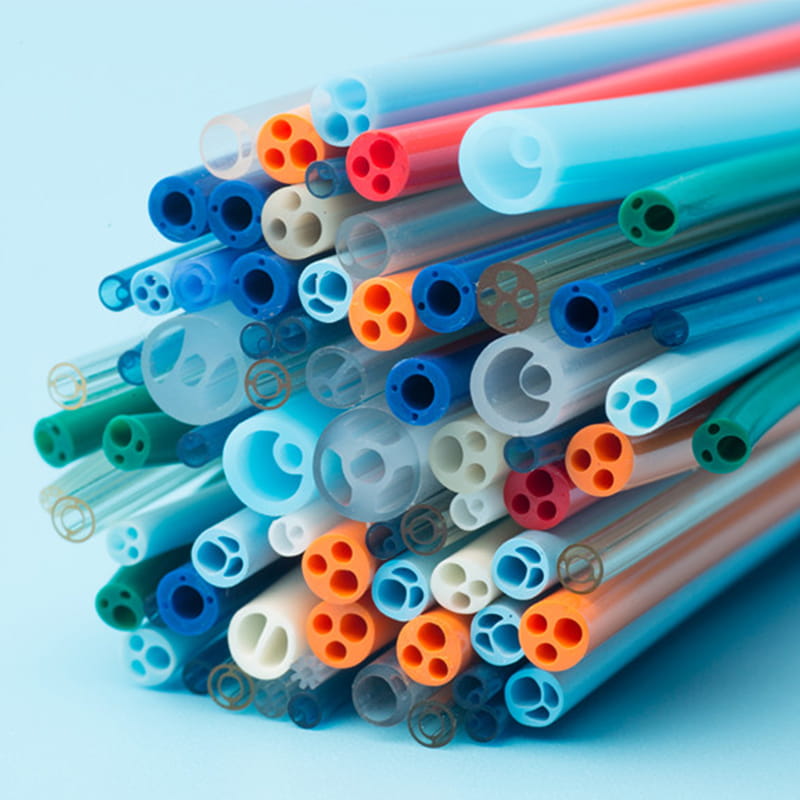
Lumen count deserves particular attention. Single-lumen devices suit one infusion at a time and are simple to manage. Double and triple lumen designs allow compatible medications to run concurrently without repeated line access, but they increase diameter and handling complexity. Specifying more lumens than the therapy requires adds cost and can complicate care without offering clinical benefit.
Materials, Sizes, and Quality Standards
Material choice affects flexibility, comfort, tissue response, and how long a device can remain in place without degrading. Three materials dominate the market, and each involves trade-offs that clinical and procurement teams should weigh together.
| Material | Strengths | Limitations | Common Use |
|---|---|---|---|
| Silicone | Flexible, biocompatible, suited to longer dwell | Higher cost, can feel stiffer during handling | Long-term urinary and sensitive patients |
| Polyurethane | Strong, thin walls, good kink resistance | Cost varies with grade and manufacturing | Vascular catheters and PICC lines |
| Latex | Soft, cost-effective for short use | Allergy risk, degradation with long dwell | Short-term disposable devices |
Reading Size Specifications
Sizing conventions differ by device family, and mixing them up is a common source of ordering errors. Urinary and many drainage catheters are sized in the French scale, where a larger number indicates a larger outer diameter. Intravascular catheters are typically labeled by gauge, where a smaller number indicates a larger bore. Length, lumen count, and tip configuration are listed separately and should be confirmed for every reorder.
Regulatory and Quality Expectations
Most catheters are regulated as medical devices, and the pathway depends on the jurisdiction and device class. Manufacturers typically operate under quality management systems aligned with ISO 13485, and biocompatibility is commonly assessed against the ISO 10993 series, which covers tests for cytotoxicity, sensitization, and irritation. Sterility assurance, packaging integrity, and clear labeling of intended use are equally important. When evaluating suppliers, requesting current compliance documentation and traceability information is a practical way to confirm that a product meets baseline expectations.
- Confirm sterility method and expiry date on every lot.
- Verify that labeling states the intended dwell time and insertion site.
- Request biocompatibility and quality system documentation for the specific product family.
- Check that connector compatibility matches existing infusion sets and drainage systems.
Practical Checklist for Clinical and Procurement Teams
Clinical and purchasing teams often work from different information, and a shared checklist helps align their decisions before an order is placed. The following points capture the questions that most often prevent mismatches.
- Is the indication for the catheter documented, and is there a review point for removal or replacement?
- Has the expected dwell time been estimated with the treating clinician?
- Are there known allergies, sensitivities, or patient-specific anatomy considerations?
- Does the chosen size and lumen count match the therapy and the equipment in use?
- Will the device be used in a hospital, outpatient clinic, or home setting, and do staff or patients have the training to manage it?
- Is the expected annual volume known, so that stock levels and reorder timing can be planned?
Teams that work through these questions together tend to reduce emergency orders, minimize product substitutions at the bedside, and make it easier to review outcomes when the clinical situation changes.
Key Takeaways
Medical catheters are not a single product category. Their type, material, size, and intended dwell time together determine how safely and effectively they serve a patient. Urinary devices call for careful indication review and prompt removal, intravascular devices require dwell-time planning and tip placement awareness, and specialty drainage devices depend on clinical protocols. A structured selection process that starts with clinical need and moves through material, lumens, and setting gives both clinicians and buyers a common language for making good decisions.
Frequently Asked Questions
Q1: What is the main difference between a Foley catheter and an intermittent catheter?
A Foley catheter is an indwelling device held in the bladder by an inflated balloon and left in place for continuous drainage. An intermittent catheter is inserted for a single drainage event and then removed, which generally lowers the time the bladder is exposed to bacteria and suits people who manage their own bladder emptying.
Q2: How long can a midline catheter stay in place?
Midline catheters are commonly used for therapy lasting up to about 28 days, and many institutions set this as the upper limit for routine practice. The exact duration depends on the clinical indication, the product's labeling, and local protocols, so the care team should confirm the plan before placement.
Q3: Which material is most suitable for patients with a latex allergy?
Silicone and latex-free polyurethane are the usual choices for patients with latex sensitivity. Silicone is often preferred for longer dwell times because of its flexibility and tissue tolerance, while polyurethane is common in vascular applications where wall strength and thin profiles matter.
Q4: What information should be prepared before requesting a bulk quotation?
A useful request includes the device type, intended dwell time, French or gauge size, length, lumen count, material requirement, sterility and packaging needs, and estimated annual volume. Providing these details at the outset allows suppliers to propose comparable specifications and reduces back-and-forth before an order is confirmed.
For more information, please call us at +86-18913710126 or email us at [email protected].
Why Catheter Choice Deserves More Attention Than It Gets Few clinical devices are used as often or ...
Why Tubing Decides Whether Your Pump Delivers the Dose You Programmed In most drug delivery design ...
Designing components for multi-level intravenous cannulation is a demanding task for device enginee...
A bourdon tube is one of the most dependable ways to convert fluid pressure into a measurable mecha...
Choosing an insemination catheter looks like a routine purchasing task until the first batch reache...
A graduated feeding tube made from TPU solves a specific problem: clinicians need to verify inserti...